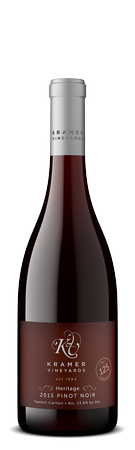
2017 Pinot Noir Heritage | Library Release
"When we planted this block in 1984, we had no idea it would still be producing exceptional fruit 40 years later. These vines have deep roots—literally and figuratively—in everything we've become."
—Trudy & Keith Kramer
Where It All Began
Walk into Block 3 on a September morning and you can feel it—these vines are different. Thicker trunks. Gnarled bark. The kind of presence that comes from 40 years of Oregon winters, springs that never seem to arrive, and summers that test your faith. Planted in 1984 when the Yamhill-Carlton AVA didn't even exist yet, this block is where the Kramer Vineyards story actually begins.
Keith and Trudy chose heritage Pommard clones and planted them on their own roots—the old-world way, before phylloxera concerns changed industry practice. Just under one acre, south-facing at 724 feet, with that typical early-Oregon spacing of 5×10 and 871 vines/acre (every viticulture student in Oregon memorizes that number). The deep Peavine and Willakenzie marine sedimentary soils drain fast, forcing those roots to dig deeper every year. By now? Those roots are probably deeper than the vines are tall.
Old vines don't produce more fruit—they produce smarter fruit. They self-regulate. They know exactly how much crop they can ripen. They deliver even ripening across the cluster and fine-grained tannins that young vines can't touch. You can't fake this with winemaking tricks. This is what four decades in the ground tastes like.
Why This Wine Matters
This isn't just another vineyard-designate Pinot Noir. This is a living connection to where Oregon Pinot started:
🌱 Own-rooted heritage vines planted before the modern era of grafted rootstocks—a practice that's increasingly rare as phylloxera concerns changed the industry
📅 40 years of root development means these vines access water and mineral layers that young vines will never reach. The depth shows in the wine.
⏳ 8+ years in bottle since the 2017 harvest—this wine has had time to become something more than it was
🏔️ Yamhill-Carlton terroir before anyone called it that—this block helped define what the AVA would become
When you drink this wine, you're tasting the 1984 decision to plant Pinot Noir in Oregon when it was still a gamble. You're tasting forty years of root growth, forty winters, forty harvests. That's not marketing. That's just what's in the bottle.
In the Glass
Pour it and watch: clear pale ruby with blue undertones. This is the elegant, lighter color you get from whole cluster fermentation, not the extracted inky darkness of manipulated wine. It looks like Pinot Noir is supposed to look—transparent, honest, alive.
On the nose: red strawberries still warm from the field, cherries, a splash of fruit punch (yes, really), baking spices. It smells joyful—which is not a word you often use for wine, but here we are.
Then you taste it. Earthy and elegant—two qualities that usually fight each other, but old vines make peace between them. Bright red fruit balanced against forest floor and mushroom. Cherries and strawberry jam, then maple syrup, cola, rhubarb, rose petals. Each sip reveals another layer, like peeling back years.
At 13% alcohol with 8+ years of evolution, this wine has reached that rare sweet spot—drinking beautifully now, but with enough structure and acidity to keep developing for years if you can wait. (Though why would you?)
When to Open This Bottle
This is a wine for moments that matter:
📖 At dinner with people you've known for decades — The kind of friends who remember when you both had more hair and fewer stories. Open this wine and tell those stories. The wine gets better as the night goes on, just like the conversation.
🍄 With an earthy fall feast — Wild mushroom risotto, the kind where you stir for twenty minutes until your arm hurts. Roasted root vegetables caramelized at the edges. Pork loin with fresh herbs. The wine's earthy notes and bright acidity make every bite better.
🎂 Celebrating longevity — An anniversary. A milestone birthday. Retirement. Anything that honors time well spent. This wine has been on a forty-year journey from the ground up. It understands what it means to last.
🌅 On an evening when you want to slow down — No TV. No phones. Just a wine that makes you pay attention because it has something to say. Pour a glass, sit down, and listen.
The Winemaking
In 2017—our largest harvest ever—we treated these Heritage grapes with care. 50% whole cluster fermentation (less than our other blocks that year) because we wanted the old-vine character to speak clearly, without too much stem influence drowning it out.
Eighteen months in 20% new French oak. Bottled in June 2019. Then the hard part: waiting. Watching it develop. Tasting it every few months to see what time was doing. Now, at 8+ years old, it's ready. This is what patience tastes like.
Perfect Pairings
- Wild mushroom risotto stirred until your arm gives out
- Roasted pork loin with fresh herbs and crispy skin
- Duck breast with cherry reduction
- Root vegetables roasted with thyme and maple until caramelized
- Aged Gruyère or any earthy, washed-rind cheese that's been waiting as long as this wine has
Serve at: 60-65°F (cool, not cold—let it talk)
Decant for: 45-60 minutes so the layers can unfold
Drink now or age: In peak form right now, but if you want to wait another 5 years, it'll reward you
Library Release Details: Bottled June 2019 • 8+ years bottle age • 37 cases remaining • From Block 3, our original 1984 Pinot Noir planting • Own-rooted heritage Pommard clones • 40+ year-old vines • 0.99 acres on south-facing slope at 724 ft elevation • Peavine/Willakenzie marine-sedimentary soils • Classic 5×10 vine spacing • 50% whole cluster fermentation • Aged 18 months in 20% new French oak • 13% alcohol
Shipping: Included in Estate Blocks 6-Pack and 2017 Vintage Collection. Free shipping on orders $300+.
Club Members: 15% off single bottles (6-11), 25% off full cases (12+). Sign in to see your pricing.